

Workforce Pathways Platform
Build a Local Talent Pipeline Through Real Employer Challenges
CapSource helps workforce boards, unemployment offices, economic development groups, chambers, community colleges, and employer coalitions create regional challenge libraries that connect job seekers with local employers through practical work samples, skills assessments, paid micro-projects, and pathways to employment.
A practical model for work-based learning, employer engagement, skills-based hiring, and regional economic mobility.
Regional Talent Ecosystem
Workforce Partners
Coordinate regional priorities and participant pathways.
Local Employers
Share real challenges tied to roles, skills, and hiring needs.
Job Seekers
Complete work samples and move toward paid opportunities.
The Opportunity
Traditional Hiring and Training Leave Too Much to Chance
Job seekers often struggle to prove capability through resumes alone. Employers struggle to identify motivated, work-ready talent without taking on hiring risk. Workforce systems need scalable ways to engage employers, prepare participants, and create measurable pathways into paid work.
For Job Seekers
Applications rarely show what someone can actually do. Participants need practical ways to demonstrate skills, build confidence, and create evidence employers can review.
For Employers
Hiring is expensive, risky, and often based on weak signals. Employers need better ways to identify motivated local talent before committing to a hire.
For Workforce Partners
Employer engagement is hard to convert into measurable participant outcomes. Programs need scalable pathways from readiness to paid opportunity.
The Model
Turn Employer Needs Into Structured Workforce Challenges
Local employers contribute realistic challenges connected to roles, departments, skill gaps, or priority industries. Job seekers complete these challenges to explore career paths, demonstrate applied capabilities, and build portfolio evidence.
Top performers can be invited into feedback conversations, interviews, paid micro-projects, internships, apprenticeships, part-time roles, or full-time employment.
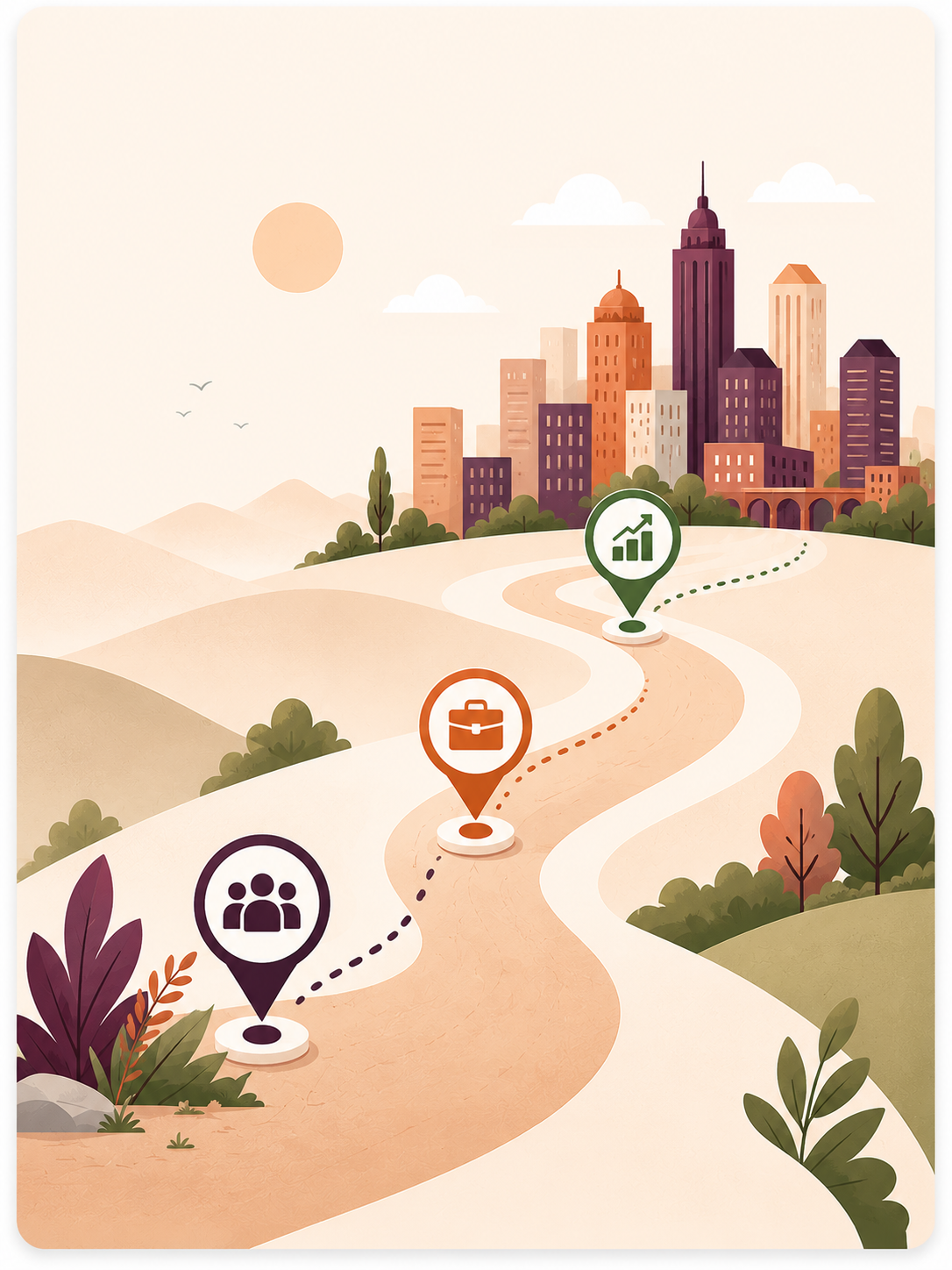
Clarify local roles, sectors, and skill priorities.
Turn employer needs into structured work samples.
Match participants to relevant pathways.
Move qualified participants into next steps.
What It Means
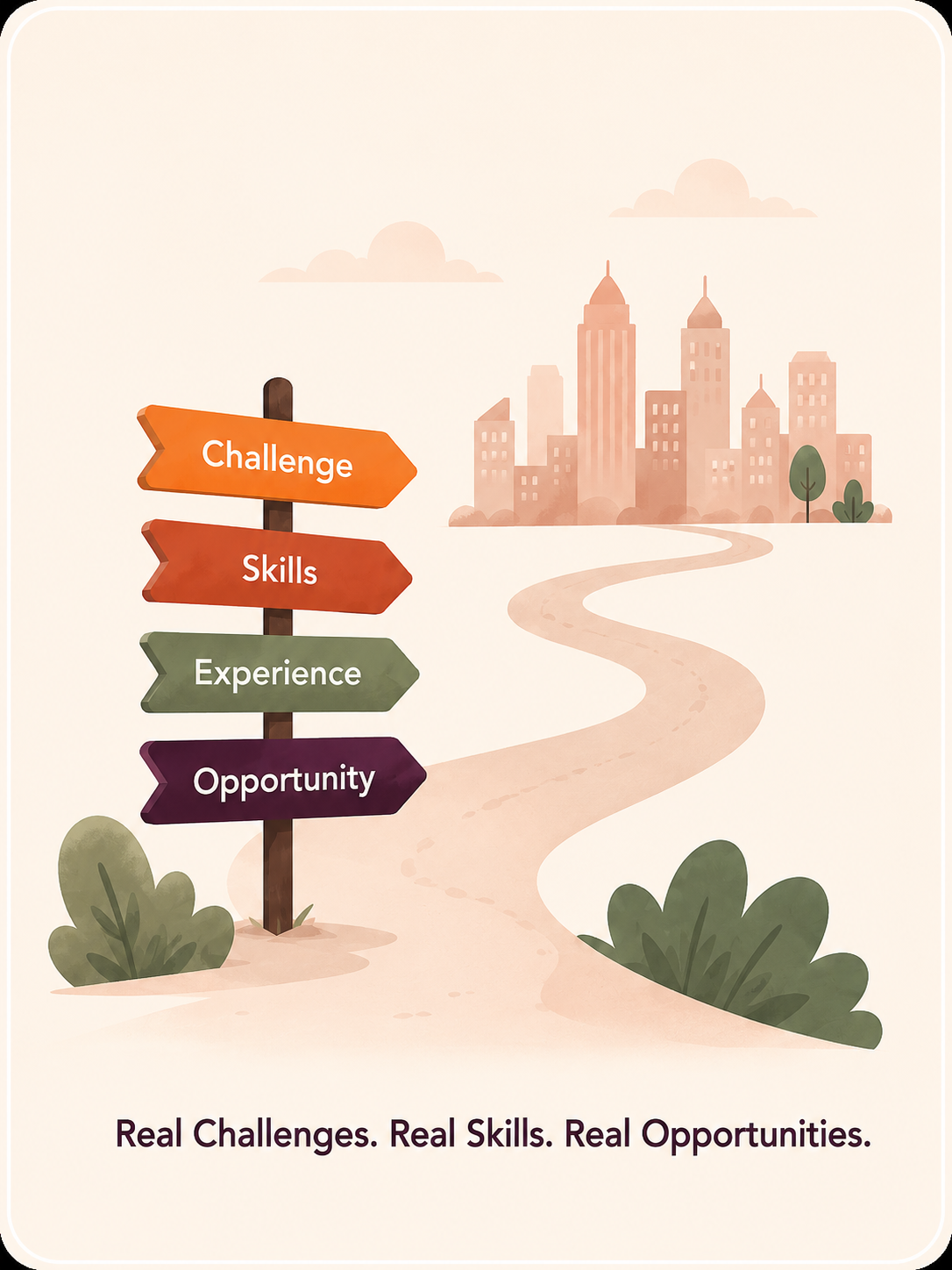
Real Challenges. Real Skills. Real Opportunities.
This model helps workforce partners move beyond generic training by connecting participants to realistic employer scenarios, applied skill-building, and visible pathways into paid work.
Real Challenges
Employers contribute practical scenarios based on actual work, role needs, customer issues, operational priorities, or local industry problems.
Real Skills
Participants build and demonstrate skills through work samples, submissions, reflections, and portfolio evidence rather than relying only on resumes.
Real Opportunities
Strong performers can be surfaced for interviews, feedback conversations, paid micro-projects, internships, apprenticeships, or entry-level roles.
Challenge Library Infrastructure
What Goes Into a Workforce Challenge Library?
A regional challenge library gives workforce partners reusable infrastructure for employer engagement, participant readiness, skills assessment, and hiring pathway development.
Employer Discovery Cases
Help participants learn about local organizations, industries, roles, and career paths.
Skills Assessment Challenges
Let participants demonstrate applied capabilities tied to real role families.
Hiring Challenges
Give employers a structured way to evaluate candidates before interviews.
Paid Micro-Projects
Create short compensated opportunities for top performers to prove fit.
Outcome Reporting
Track participation, completions, skills demonstrated, interviews, paid projects, and placements.
Shared Value
One Model, Three Sets of Outcomes
The Workforce Challenge Library creates shared value for the organizations responsible for workforce outcomes, the employers looking for talent, and the job seekers trying to move into paid work.
For Workforce Partners
- Expand employer engagement
- Increase participant activity
- Support work-based learning
- Improve readiness assessment
- Create measurable placement pathways
- Generate stronger reporting for funders
For Employers
- Discover motivated local talent
- Reduce hiring risk
- Evaluate real work samples
- Support community workforce development
- Build a stronger local talent pipeline
- Identify candidates for roles and paid projects
For Job Seekers
- Learn about local employers
- Build practical experience
- Demonstrate skills beyond a resume
- Receive feedback and visibility
- Create portfolio artifacts
- Access paid projects and hiring pathways
Pilot Model
Start With a 90-Day Regional Workforce Pilot
A pilot gives regional partners a practical way to test the model, engage employers, activate participants, and generate early evidence before scaling into a larger workforce initiative.
Participants: 50 to 100 job seekers
Employers: 8 to 12 local organizations
Challenge Library: 15 to 25 employer-informed cases
Paid Opportunities: Optional paid micro-projects for top performers
Sectors: 2 to 3 priority industries
Outcome Report: Participation, employer engagement, skills demonstrated, interviews, paid projects, and placements
Challenge Examples
Example Workforce Challenges
Challenges can be designed around local hiring needs, priority sectors, employer workflows, or entry-level role families where practical skills matter.
Service Roles
Customer Success Challenge
Participants review a customer scenario and draft a practical response plan.
Sales Roles
Sales Development Challenge
Participants research local prospects and create an outreach strategy.
Operations Roles
Operations Improvement Challenge
Participants analyze a process bottleneck and recommend improvements.
Healthcare Roles
Healthcare Administration Challenge
Participants organize scheduling, service coordination, or patient communication scenarios.
Logistics Roles
Logistics Challenge
Participants review an inventory, delivery, or staffing scenario and propose a plan.
Marketing Roles
Digital Marketing Challenge
Participants create a local campaign concept for a small business or nonprofit.
See It in Practice
Explore Real Challenge Examples Already Built on CapSource
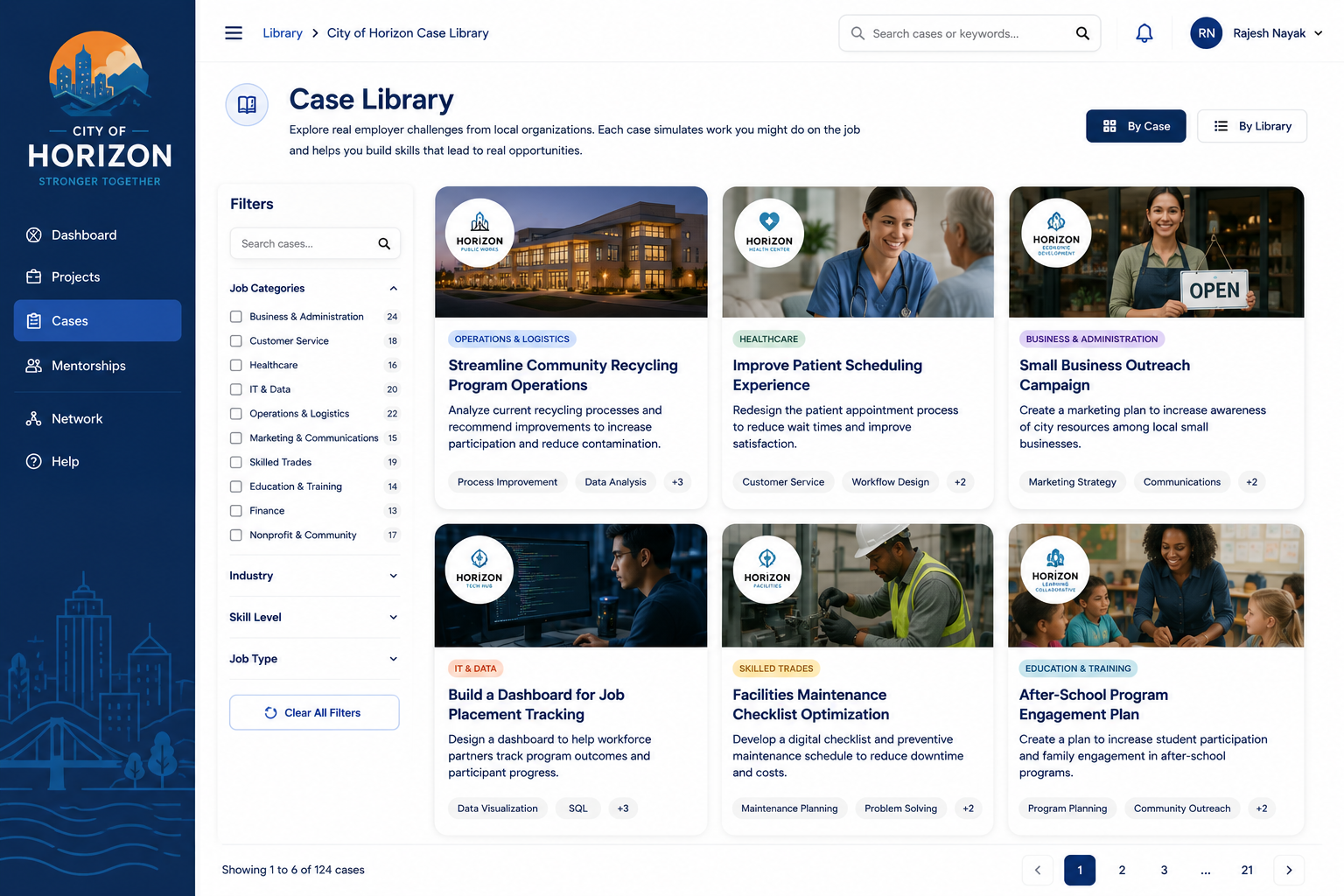
Workforce Challenge Libraries are built on the same practical case infrastructure CapSource already uses to help learners explore organizations, solve realistic problems, demonstrate skills, and create portfolio-ready evidence.
Featured Example
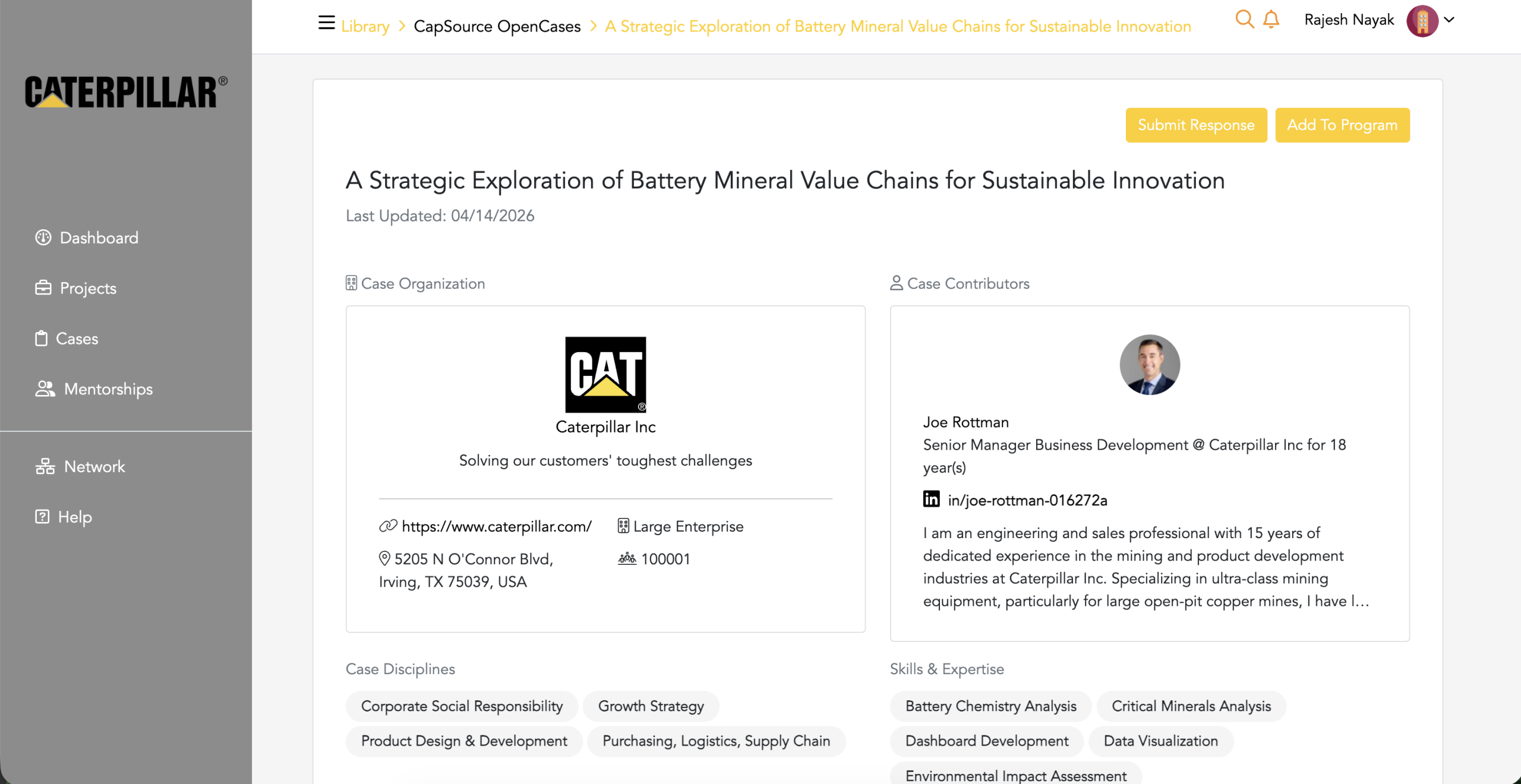
Caterpillar Case Challenge
This employer-informed case shows how a real organization can turn a strategic business issue into a structured learning and talent discovery experience.
For a workforce pilot, similar cases can help job seekers understand an employer, complete a practical work sample, and show how they think before moving into a conversation, interview, or paid project.
Use Case
Employer Discovery
Participants learn about a real organization, its priorities, its customers, and the kinds of problems its teams solve.
Use Case
Skills Demonstration
Participants submit work products that show communication, research, analysis, problem solving, operations, customer success, or marketing skills.
Use Case
Hiring Pathway
Employers and workforce partners can identify high-potential participants and invite them into interviews, paid micro-projects, internships, or roles.
Why CapSource
Built on CapSource’s Experiential Learning Infrastructure
CapSource already helps organizations turn real-world challenges into structured projects, cases, mentorship experiences, and applied learning opportunities. The Workforce Challenge Library extends that model to regional workforce development, helping public agencies, employers, and community partners create scalable pathways from learning to work.
Implementation
How a Workforce Challenge Library Gets Built
The implementation model is designed to be practical, collaborative, and focused on fast learning rather than a long planning cycle.
Step 1
Convene Employers
Identify organizations with hiring needs, skill gaps, or talent pipeline priorities.
Step 2
Build Challenges
Convert employer needs into structured cases, assessments, and optional paid project pathways.
Step 3
Engage Participants
Invite job seekers to complete challenges aligned to their goals, experience, and target roles.
Step 4
Advance Talent
Help employers review top performers and move qualified participants into interviews, paid projects, or roles.
Start the Conversation
Explore a Workforce Challenge Pilot in Your Region
CapSource can help your region adapt real employer challenges, including case-style examples already used on the platform, into a practical workforce pilot for job seeker readiness, skills-based hiring, employer engagement, and paid work pathways.